G3TXQ HexBeam Antenna Build

Intro
Long time ago, around the time when I have passed my licence test, I have found those step-by-step instructions on building a hexbeam antenna , which I thought is pretty cool. However, back then, I had limited knowledge on what this antenna is about, the wire antennas I was using worked well for me (I was making contacts, you know?) and also, even if very cool, it looked pretty scary to build.
Now, after some time has passed, and when I gained some more experience and knowledge about the hobby, I think that the time has come to build this, as I would like to try something else than a wire antenna and dipole, which are the only antennas I was using so far. So here we are and I am going to build this!
Part 1: Sourcing materials
The DIY instructions for building the G3TXQ hexbeam from the hex-beam.com features detailed parts list, including the links to the e-shops where you can purchase them. This is very nice. However, as the instrucions comes from K4KIO, who is, of course, based in USA, it means that its not really an option for folks based in Europe, like me, due to massive shipping fees.
So I needed to go through the parts list one by one and find a matching parts, or suitable alternatives, ideally in e-shops in my country, in the Czech Republic. Majority of the parts are easy to find, as they are standard machine screws, nuts, etc. In those cases, I just needed to convert the imperial units to the metric units for each part. Nevertheless, this was very time consuming, as ther are a lot of parts. Also, there were few notable parts that I had trouble finding, or I needed to find a good alternative, or think how to create them. Those were the parts:
Base plate
The original instructions suggests to buy a 6061-T6 aluminium plate (6061-T6 is a sturdy aluminum), 5mm thick and 30x30cm in dimension and cut it yourself in the hexagon shape with a hacksaw or similar. I searched the web for this type of aluminium, but usually, they will sell you just a big chunk of 2x1m in dimension, which is kind of pricey and unnecessary.
I have also found a source on allegro.cz marketplace that offered 30x30cm aluminum plate, 6mm thick, and the price was about 30EUR. That was way cheaper than the 2x1m plate. However, I finally found a “machine-parts-as-a-service” i-dilna.cz where you can upload a 3D model, choose the material and they will cut this for you using CNC tools. I have found out that the price for this bespoke-cut hexagon was about 20EUR, So I ordered base plate from them.
They can even drill a holes for you, if they are in the 3D model, because I cannot create any models, I asked Google Gemini to create a simple hexagon shape model for me with the required dimensions (lol) and since I did not know at that time, what dimension of U-bolts I will use, because I didn’t know yet what fiberglass spreaders I will use, I couldn’t know where the holes should be placed, so I decided that I will drill them myself when all those unknowns will be known and ordered just this plain hexagon shaped base plate, without any holes from them. The manufacturer needs 2-3 weeks to make the shape for you, so I ordered the base plate as a first thing.
OBRAZEK HERE
Plain 30x30cm hexagon shape 3D modelBase plate flanges
I spent a lot of time trying to find a square shaped flange, that is used in original instructions, but has little to no luck. I wanted to have the square shaped flanges, because in the original instructions, they are placed on the base plate, opposite to each other - one is on top side of the base plate, and its purpose is to hold the center-post and the other is placed on the bottom of the base plate and its purpose is to serve as a base for a tube, that will be used to fix the antenna to the mast. So the mounting holes in flanges needs to align, so you can run one screw that will go through the hole of both flanges at once.
I could not find the square ones, so I searched again, but I had in my mind that the holes needs to align to each other when placed as described above, and ideally, the flanges should be a standard “catalogue” machine parts, so if anyone wants to replicate my steps, one can easily do that. After a lot of searching and decided to use the ASTM 304/304L A-182 WN/RF 1 1/4 SCH 40S STD stainless steel flange, which is very massive (that means sturdy) with inner diameter of 35mm (so I can use 35 aluminium tube that will be fixed to a mast).
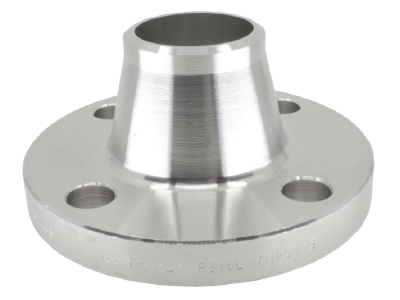
I think that this type of flange is kind of non-standard in Europe, as it uses imperial units, so I found another one, which “more standard”, but I did not want to use it, because it has bigger outer diameter and also, I could not find an exact inner diameter dimension. If you decide to use this alternative, you will need to improvise a little bit with the other parts, like the tube for the center post, but thats the part of the fun I guess.
Krková příruba DIN 2631 PN 6 DN 40Fiberglass spreader arms
Another very important part of the antenna, where I needed to find an alternative, was the fiberglass spreader arms. Initially, I thought about using a Lakeside 100 Travel 6m fishing poles from Decathlon that I use for my outdoor portable operations. GOOD PRICE, other ppl using them ETC
USA only blah blah etc, very time consuming, decathlon beam vs spiderbeam price, rotator need - link